RealTalk Credit · Mortgage Ready

Your Rent Is Buying
Someone Else's House.
When Does It Buy Yours?

Every month you pay rent, you're building someone else's equity. This calculator shows you exactly what your rent payment buys in a home purchase and what's standing between you and the approval.

43%

The DTI threshold most buyers never heard about before they applied

$40K+

Extra interest a lower credit score costs over 30 years on a $180K home

20 Yrs

Inside the lending system making the decisions that approved and denied files

The Real Math

This Is What DTI Is Actually
Doing to Your Approval

Real example. $7,500 monthly income. $1,800 rent. $1,425 in reported monthly debt payments. Here is what the lender calculates the moment they pull your file and most buyers have never seen this number before they apply.

Real Example

$90,000 annual income · $1,800 rent · $1,425 reported monthly debts

😰 Current DTI


Total Monthly Debt

$3,225

Rent + all reported debts


Current DTI

43%

Right at the lender's limit


Lisa's Recommended Threshold

36%

Where you need to be to not be house poor

🏠 After Strategy


Credit Cards Paid to 10%

-$400

Reduced minimum payments


New DTI

37.7%

Under the lender threshold


Status

QUALIFIES

Same income. Strategic debt move.

$525/month

That's how much debt needs to move to get from 43% to 36% the calculator shows you exactly which debts to move first

What most people don't know: A 43% DTI gets you approved on paper. It does not mean you can afford the payment comfortably. Lenders approve at 43%. I recommend 36%. That gap is where people end up house poor approved but stretched thin every single month.

What's Inside

Everything You Need to See
Your Full Mortgage Picture

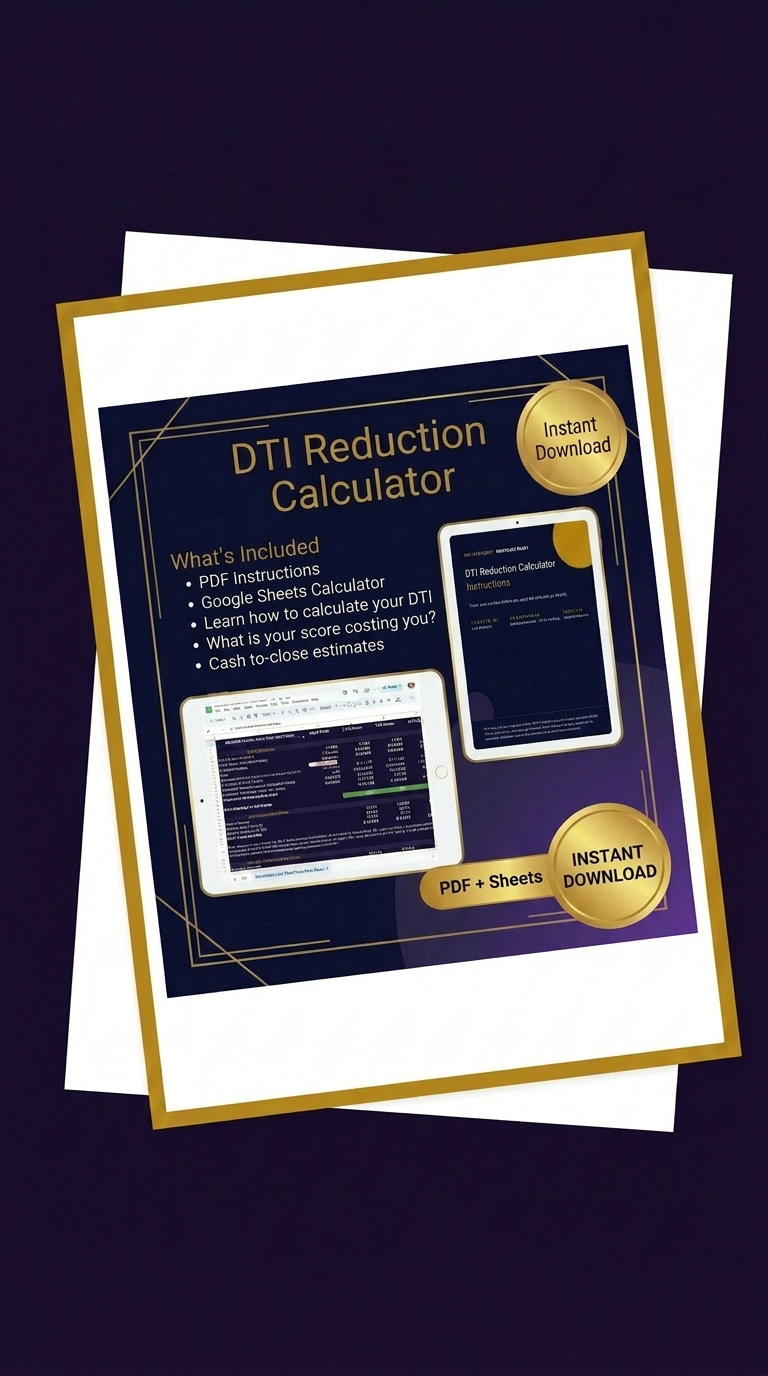
Six tools in one Google Sheets workbook. Built from 20 years of reviewing the files that get approved and the files that don't.

  • Your DTI Snapshot

    Enter your income and monthly debts. See your current DTI, what it looks like when rent becomes a mortgage payment, and exactly how far you are from qualifying.

  • What Your Rent Actually Buys

    Your rent payment translated into home price across three down payment scenarios 3.5%, 10%, and 20% down. Monthly payment, total interest, and cash needed to close.

  • The Cost of a Lower Score

    Side by side comparison of a 6.5% rate vs a 7.5% rate. The monthly difference and the total interest difference over 30 years. This number changes how people think about applying before they're ready.

  • Cash Needed to Close

    Down payment plus closing costs plus escrow funding for each scenario. Most buyers are blindsided by this number. You won't be.

  • Plain Language Loan Guide

    FHA vs Conventional explained, MIP vs PMI, reserves, and a full glossary included in the instruction guide that comes with every calculator.

  • Your Own Personal Copy

    Delivered as a Google Sheet you copy to your own Drive. Your data stays private. No logins. No subscriptions. Yours to keep.

20+

Years Lending

10K+

Reports Reviewed

Zero

BS Gimmicks

Who Built This

I'm Lisa.
I Made the Decisions.


Former Loan Officer · Underwriter · Lending Supervisor · Truth-Teller

I spent 20 years inside the lending system reviewing files, training underwriters, and making approval decisions. I know exactly what disqualifies buyers before they ever sit down with a lender.

DTI is the number credit repair companies never talk about. It doesn't matter how clean your report looks if your debt load is too high to qualify. I built this calculator because people deserve to know their number before they apply not after they get denied.

Lender Truth: The DTI threshold is 43%. Most people have never heard that number before they apply. Some find out at pre-approval. Some find out at the closing table. This calculator puts it in your hands first — along with exactly what changes when you pay down the right debts in the right order.

Get Instant Access

Know Your Number
Before You Apply

One time. No subscription. Google Sheets delivered to your Drive instantly

Instant access · Includes 13-page instruction guide · FHA vs Conventional loan breakdown · Full glossary